Industry
Software that holds up where the work is hard.
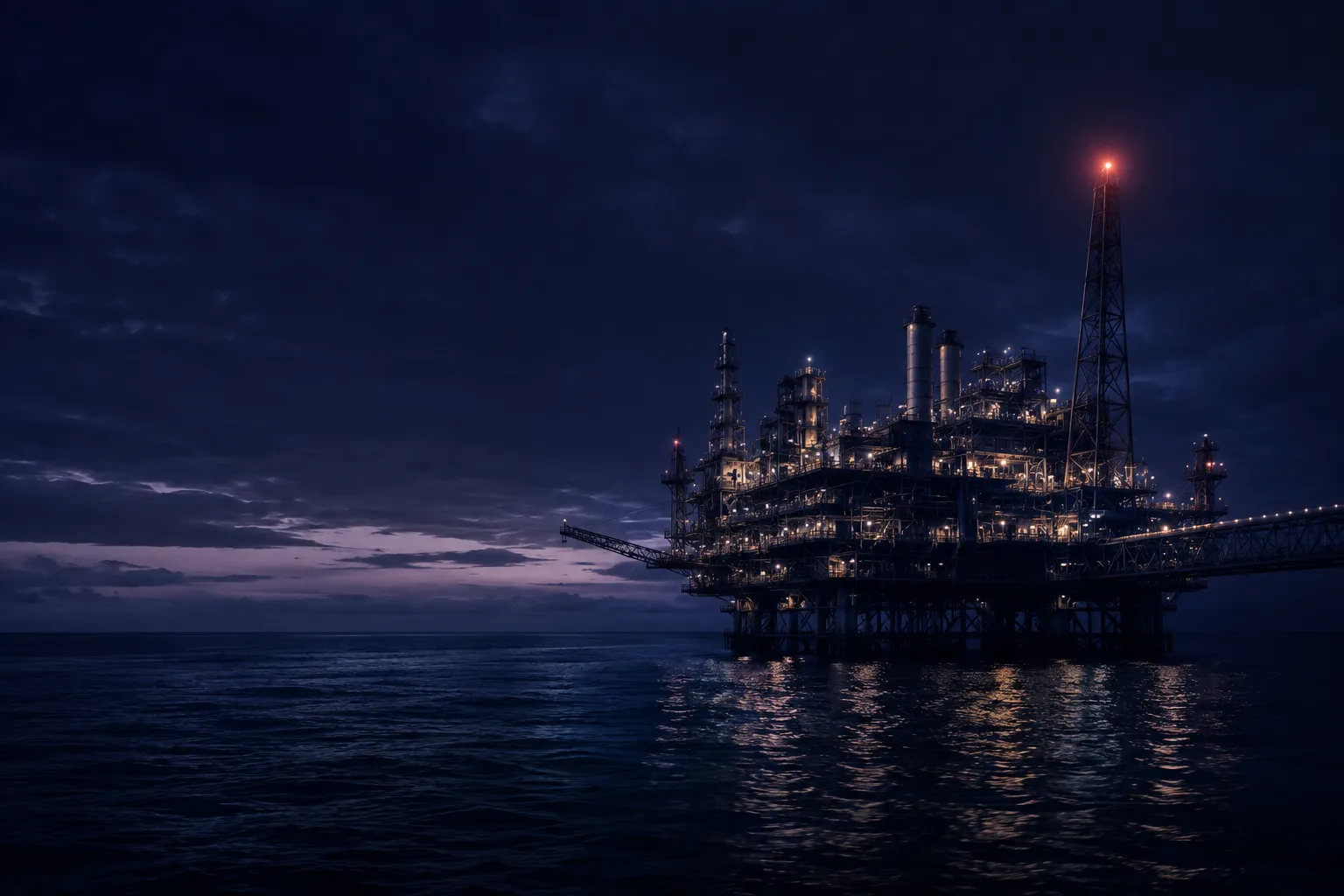
From wellhead to terminal, we build the practical software that keeps oil and gas operations running: predictive maintenance, real-time visibility and field tools that work when the signal drops.
Overview
Oil and gas runs on assets that are expensive to own, dangerous to ignore and often sitting a long way from the nearest engineer. Compressors, pumps, separators and pipelines throw off more data than any control room can read, yet the questions that matter stay stubbornly simple: what is about to fail, what is costing us money, and is everyone safe. We build software that answers those questions in plain terms, not another dashboard nobody trusts.
Our three founders spent years inside heavy industry before they wrote a line of consulting work, so we start from the operational reality: intermittent connectivity, ageing control systems, shift handovers scribbled on paper and a hard rule that safety comes first. We do not arrive with a platform to sell. We advise honestly on what is worth doing, build only what earns its place, and can run and support it afterwards so the value does not walk out of the door with a contractor.
Most of the useful data already exists. It is trapped in SCADA tags, historian archives, maintenance logs and a dozen spreadsheets that never speak to each other. A large part of our work is patient integration: reading from PI and other historians, tapping SCADA and telemetry feeds, and joining them to maintenance and production records so a single, honest picture emerges. From there, predictive maintenance and real-time operations become achievable rather than aspirational.
We design for the field, not the demo. That means software that works offline and syncs later, screens a technician can use in gloves and sunlight, and alerts calm enough to be believed. Whether you are extending the life of an ageing platform or standing up a greenfield facility, we aim for the same outcome: fewer surprises, safer work and equipment that lasts longer because you saw the problem coming.
The reality
What we hear from oil & gas teams.
Unplanned downtime on critical rotating equipment, often with no early warning
Data locked inside SCADA, historians and maintenance systems that never connect
Remote sites with intermittent or expensive connectivity and no local IT
Ageing control and legacy systems that are risky and costly to change
Field crews still working on paper, with data re-keyed days later
Safety-critical processes where a wrong reading or missed alert carries real consequences
How we help
Software and data, built for oil & gas.
Predictive maintenance
We turn vibration, temperature, pressure and runtime data into early, trustworthy warnings, so maintenance is planned around evidence rather than the calendar or the last breakdown.
SCADA & historian integration
We connect PI and other historians, SCADA tags and telemetry to a clean, queryable data layer, ending the copy-paste between control systems and reporting.
Real-time operations visibility
Live views of production, flow and asset health that a control room and a manager both understand, with alerts tuned to be believed and acted on.
Field-ready and offline apps
Inspection, permit and data-capture tools built to work with no signal and sync when connectivity returns, so records are captured once, at the source.
Safety-critical software
Permit-to-work, isolation tracking and compliance workflows built with care, clear audit trails and the conservative engineering these processes demand.
Legacy modernisation
We extend and wrap ageing systems safely, adding modern reporting and interfaces without the risk of ripping out something that still works.
How we work
People who have worked your world, not just read about it.
Advise
We walk the process with your engineers and operators, map where the data really lives and agree what is genuinely worth building. You get an honest plan, not a wish list.
Build
We deliver in small, working increments, integrating with your existing SCADA, historian and maintenance systems and testing against real site conditions, not a clean lab.
Run
We can operate, monitor and support what we build, tuning alerts and models as the plant changes so the software keeps earning its keep.
- -28% typical
- Unplanned downtime on monitored assets
- Days, not weeks
- From field capture to reliable reporting
- One source
- SCADA, historian and maintenance data, joined
FAQ
Questions we hear a lot.
What does predictive maintenance actually involve for oil and gas equipment?
It means using the data your equipment already produces, vibration, temperature, pressure and runtime, to spot the signature of a developing fault before it becomes a failure. We build models and clear alerts around your critical rotating assets like compressors and pumps, so maintenance is scheduled on evidence. The aim is fewer unplanned shutdowns and longer equipment life, not a black box you cannot question.
Can you integrate with our existing SCADA and historian systems?
Yes. Most of our work begins by reading from historians such as PI and from SCADA and telemetry feeds, then joining that to maintenance and production records. We do this without disturbing the control systems themselves, so operations continue safely while a clean, queryable data layer is built alongside.
Will field software work at remote sites with poor connectivity?
That is exactly what we design for. Our field and inspection tools work fully offline and sync when a connection returns, so a technician can capture data once, at the source, regardless of signal. Records stay accurate and nothing has to be re-keyed back at the office days later.
How do you handle safety-critical and legacy systems?
Carefully and conservatively. For safety-critical workflows like permit-to-work and isolation we build clear audit trails and fail-safe behaviour, and we test hard against real conditions. For ageing systems we prefer to extend and wrap rather than rip out, adding modern reporting and interfaces while leaving proven equipment undisturbed.
Working in Oil & Gas? Let's talk.
Tell us what you are trying to fix. We will tell you how we would approach it, and whether software is even the right answer.